
Preserving Original Timber Sash Windows on a Listed Property
Lees Building Contractors Ltd have recently been carrying out the careful restoration of original timber sash windows on a listed property, preserving important historic joinery while repairing areas affected by many years of weather exposure and timber decay.
Original sash windows contribute considerably to the appearance, proportions and architectural character of a period property. When deterioration occurs, however, replacement is not necessarily the best solution.
For this project, our objective was clear: retain as much of the original window and historic timber as reasonably possible, repair only what was necessary and extend the working life of the existing sash windows.
The work combines traditional joinery techniques, including hardwood scarf repairs, with specialist modern timber restoration products from Repair Care.
Assessing the Original Sash Windows
Before beginning any restoration work, the existing windows were carefully inspected to establish the extent of deterioration.
Years of exposure to rain, moisture, sunlight and changing temperatures had resulted in areas of timber decay, particularly around vulnerable parts of the windows.
These included:
- Window sills
- Lower sections of the sash frames
- External timber mouldings
- Joints and corners
- Areas where protective coatings had deteriorated
- Localised sections exposed to persistent moisture
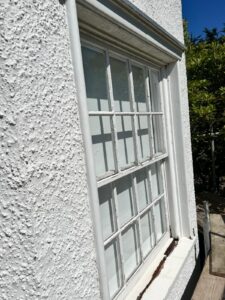
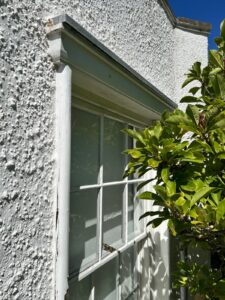
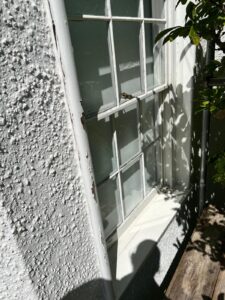
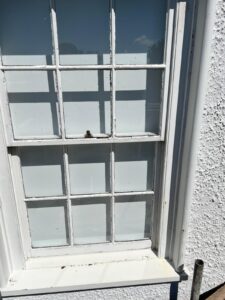
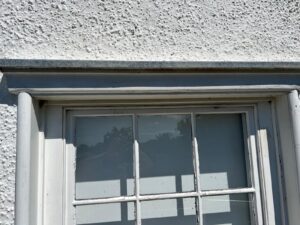
The photographs from the project show that some areas appeared considerably deteriorated externally.
Importantly, this does not automatically mean that an entire traditional timber window needs replacing.
A detailed assessment can identify which sections remain structurally sound and which require repair.
Why Repair Original Windows on a Listed Building?
Listed properties require a different approach from conventional modern buildings.
Original windows, doors, stonework, roof structures and other architectural features can form an important part of the historic fabric and significance of a building.
Consequently, removing an original sash window and installing a completely new replacement may not always be appropriate and, depending on the nature of the proposed work and the listing, consent requirements may apply.
Where an existing timber sash window remains capable of repair, careful restoration can often preserve considerably more of the building’s original material.
This was the approach adopted on this project.
Rather than assuming that deteriorated windows needed replacing, we assessed each affected section individually and determined the most appropriate method of repair.
Traditional Hardwood Scarf Repairs
Where sections of timber had deteriorated beyond reasonable repair, traditional hardwood scarf repairs were undertaken.
A scarf repair involves carefully removing the defective section of timber while leaving the sound original material intact.
A new piece of appropriately prepared hardwood is then formed to replace the damaged section and carefully jointed—or scarfed—into the existing timber.
This approach offers several advantages:
- Retains substantially more original timber
- Avoids unnecessary replacement of complete window components
- Allows heavily deteriorated sections to be renewed
- Maintains traditional profiles and detailing
- Provides a strong and durable repair
- Helps preserve the character of the original window
Creating a successful scarf repair requires considerably more than simply cutting out damaged timber.
The replacement section needs to be accurately formed so that its dimensions, mouldings and profiles correspond with the original joinery.
Matching the Existing Joinery
Maintaining the appearance of traditional windows is particularly important when working on period and listed properties.
Our replacement hardwood sections are carefully formed to integrate with the existing joinery rather than appearing as unrelated additions.
Where original profiles and mouldings remain, these provide a reference for reproducing the detailing of replacement sections.
Once the repair has been prepared, finished and professionally decorated, the new hardwood becomes part of the existing window while the maximum practical amount of original material remains in place.
This is one of the fundamental principles behind sympathetic building restoration: repair rather than replace wherever it is practical and appropriate to do so.
Repair Care Timber Repair System
Not every area of deterioration requires a complete section of timber to be replaced.
For smaller or localised areas, Lees Building Contractors Ltd have also used the specialist Repair Care timber repair system where appropriate.
Affected timber can be carefully prepared by removing deteriorated material before the area is reconstructed using specialist timber repair products.
This allows us to address localised defects without unnecessarily removing surrounding timber that remains in serviceable condition.
The system is particularly useful when dealing with areas where traditional timber remains fundamentally sound but a smaller section requires intervention.
Combining Traditional Craftsmanship with Modern Repair Systems
One of the strengths of this approach is that there does not need to be a single repair technique for every part of a window.
Different sections can require different solutions.
For this listed property we have been able to combine:
- Traditional hardwood scarf repairs
- Careful removal of decayed timber
- Specialist timber repair resins
- Existing timber conservation
- Traditional joinery techniques
- Accurate reproduction of existing profiles
- Thorough preparation prior to decoration
The appropriate repair method is selected according to the condition and location of each affected section.
This enables us to preserve original material wherever practical while still creating durable repairs.
Repairing Sash Window Sills
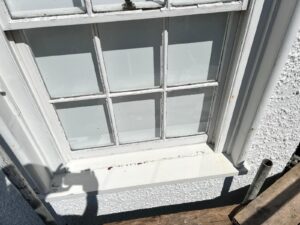
Window sills are particularly susceptible to deterioration because of their exposure to the elements.
Their purpose includes directing rainwater away from the building, but damaged paintwork, cracks, failed joints or prolonged moisture exposure can eventually allow water into the timber.
Decay frequently begins locally rather than affecting the entire sill.
Where sufficient sound timber remains, removing only the defective area and introducing new hardwood can therefore provide a much more sympathetic solution than replacing the entire window.
The photographs from this project clearly illustrate why careful inspection is important. Areas that initially appear extensively weathered can sometimes contain a substantial amount of timber that remains suitable for retention.
Preserving the Character of the Listed Property
The objective of this project extends beyond repairing damaged timber.
The work is ultimately about preserving the architectural character of the building.
Original sash windows possess details, proportions and craftsmanship that contribute to the appearance of a historic property. Retaining them maintains a physical connection with the building’s construction and history.
Our restoration approach therefore concentrates on intervention only where necessary.
Rather than asking:
“How quickly can this window be replaced?”
The more appropriate question for this type of property is:
“How much of the original window can reasonably be preserved?”
That distinction is fundamental to sympathetic period property restoration.
Preparation and Professional Decoration
Timber repair itself is only one stage of a successful window restoration.
Once all defective areas have been repaired and the necessary joinery work completed, the windows require thorough preparation before decoration.
A high-quality protective coating system helps defend timber against future exposure to moisture and changing weather conditions.
Correct preparation and ongoing maintenance are particularly important for external timber joinery.
Once completed and fully decorated, the objective is for these restored sash windows to provide many more years of service while continuing to retain the traditional appearance of the property.
Can Old Timber Sash Windows Be Repaired?
In many cases, yes.
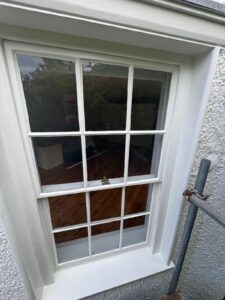
A sash window that looks badly weathered externally is not necessarily beyond repair.
The feasibility of restoration depends on factors including:
- Extent and depth of timber decay
- Condition of structural joints
- Previous repairs
- Condition of the sash boxes and frames
- Window operation
- Amount of sound original timber remaining
- Historic significance of the window
- Requirements associated with the listed property
This is why inspection by someone experienced with traditional buildings is important before deciding that complete replacement is necessary.
Sash Window Restoration or Replacement?
There is no single answer applicable to every property.
Where windows are extensively deteriorated or unsuitable for continued repair, more substantial intervention may ultimately be required.
However, this project demonstrates that significant visible deterioration does not automatically mean complete replacement is necessary.
Traditional carpentry techniques and specialist timber repair systems can often preserve a considerable proportion of an existing window.
For period and listed buildings, that can be particularly valuable.
Traditional Building Restoration by Lees Building Contractors Ltd
At Lees Building Contractors Ltd, our work extends beyond standard building and refurbishment.
We understand that older and traditional properties require a considered approach, particularly when existing architectural features are worth preserving.
Our services include:
- Listed building restoration
- Period property refurbishment
- Timber sash window restoration
- Traditional hardwood repairs
- Bespoke joinery
- Structural alterations
- Stone and masonry repairs
- Property renovations
- Extensions
- Roofing
- Bathrooms and wet rooms
- General building work
Whether repairing a traditional timber window or undertaking a much larger property refurbishment, our emphasis remains on quality workmanship, appropriate materials and attention to detail.
Listed & Period Property Restoration in Weston-super-Mare, North Somerset and Bristol
Lees Building Contractors Ltd undertake building, refurbishment and restoration projects throughout Weston-super-Mare, North Somerset, Bristol and surrounding areas.
If you own a listed, period or traditional property and have original timber windows showing signs of deterioration, obtaining professional advice before considering wholesale replacement could preserve more of the building’s original character.
We can assess the condition of existing timber joinery and discuss the repair options appropriate to your property and proposed works.
Talk to Lees Building Contractors Ltd About Your Restoration Project
Do you have traditional sash windows, deteriorated timber joinery or a period property requiring sympathetic building repairs?
Speak to Lees Building Contractors Ltd about your project.
Lees Building Contractors Ltd
Traditional Building • Refurbishment • Restoration
Office: 01934 525424
Mobile: 07435 238439
Email: info@lees-builders.co.uk
Website: https://lees-builders.co.uk/
Frequently Asked Questions
Can rotten timber sash windows be repaired?
Often, yes. The extent of decay needs to be assessed first. Localised deterioration can sometimes be removed and repaired using new hardwood sections or specialist timber repair systems while retaining the sound original material.
What is a hardwood scarf repair?
A hardwood scarf repair involves removing a defective section of timber and accurately joining a newly formed hardwood section into the sound original timber. It allows individual damaged areas to be renewed without replacing an entire window component.
Can you replace sash windows in a listed building?
Alterations affecting the character of a listed building can be subject to listed building controls. The appropriate approach depends on the property, significance of the windows and proposed work. Owners should establish any necessary consent requirements before replacement or material alterations are undertaken.
What areas of a sash window commonly suffer from timber decay?
Window sills, lower frame sections, joints and exposed external mouldings are common areas because they experience prolonged exposure to rain and moisture.
Do you restore sash windows in Weston-super-Mare and North Somerset?
Yes. Lees Building Contractors Ltd undertake traditional building, refurbishment and restoration projects throughout Weston-super-Mare, North Somerset, Bristol and surrounding areas.