A bespoke oak bar should feel part of the home, with proportions, materials and details that suit its surroundings. For this project in Hutton, North Somerset, Lees Builders transformed an old oak frame into a handcrafted bar, combining the timber’s existing character with a solid oak worktop, detailed joinery and traditional oak pegs.
The finished bar brings warmth and a distinctive focal point to the room. Its panelled front and substantial L-shaped worktop show how carefully considered carpentry can give older timber a fresh purpose.
View the completed Hutton oak bar project and photo gallery.
From an Old Oak Frame to a Bespoke Home Bar
The starting point for this project was an old oak frame. Reusing it meant working with the character already present in the material, including its grain and natural variations.
Rather than aiming for a uniform, factory-made appearance, the finished design allows those features to remain visible. Each section contributes to the overall look, creating a bar with an individual identity.
This is one of the strengths of bespoke joinery: the design can respond to both the available timber and the space where it will be used.
- An old oak frame given a new purpose.
- A substantial solid oak worktop.
- An L-shaped layout that follows the corner of the room.
- A panelled oak front and end.
- Traditional oak pegs and carefully detailed joints.
- Visible butterfly-shaped details within the worktop.
A Solid Oak Worktop with Character
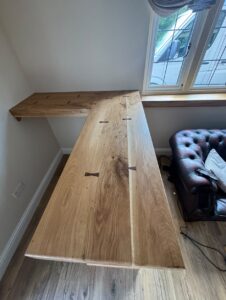
The worktop is a defining feature of this bespoke oak bar. Its thickness gives the design a strong visual presence, while the visible grain adds texture and interest.
The L-shaped arrangement creates a generous surface and makes use of the room’s corner. From above, the worktop reveals variations in the oak alongside the butterfly-shaped joint details. Viewed from the front, its depth complements the framed panels beneath.
A successful timber worktop depends on more than appearance. During the design stage, practical considerations include the available space, edge profile, support, intended use and choice of finish. These decisions help shape a bar that works comfortably within the room.
Traditional Joinery and a Panelled Finish
The craftsmanship continues beneath the worktop. Framed oak panels give the front and end of the bar a balanced appearance, with the surrounding rails and uprights providing a clear structure.
Traditional oak pegs contribute to the character of the project, while the shaped timber support beneath the returning worktop adds another considered detail.
These smaller features matter. A bespoke piece is seen from several angles, so the end panel, underside and junctions deserve attention alongside its main front face.
The result is a bar that rewards a closer look, from the natural timber grain to the way individual components meet.
Why Choose a Bespoke Oak Bar?
A layout shaped around the room
A made-to-measure design can account for corners, windows, circulation space and neighbouring furniture. The Hutton project demonstrates how an L-shaped worktop can sit within an existing room while creating a clear focal point.
Natural variation in the timber
Oak has a recognisable grain, with variations between individual boards and sections. Leaving that character visible gives the finished piece depth and individuality.
Coordinated details
Worktops, panels, supports and edges can be considered together. This helps the bar read as one complete design.
Opportunities to reuse existing timber
Where suitable material is available, incorporating older oak can preserve its character and give it a useful new role. Its suitability needs to be assessed before deciding how it should be used.
For homeowners planning wider changes, bespoke carpentry can also be considered alongside home refurbishments or property renovations.
Planning Your Own Bespoke Joinery Project
Before commissioning an oak bar or another made-to-measure feature, think about both its appearance and everyday use.
- The location: Where will the bar sit, and how much room is available around it?
- The purpose: Will it mainly serve drinks, provide a standing surface or form part of a wider entertaining space?
- The layout: Would a straight, corner or L-shaped design work best?
- The material: Do you have existing timber you would like assessed for reuse?
- The details: What worktop profile, panelling and visible joinery suit the room?
- The finish: How will the timber be protected and maintained?
Photographs, approximate measurements and examples of styles you like provide a useful starting point. If you have older oak available, mention it at the outset so its condition and dimensions can be considered.
The Finished Oak Bar in Hutton
The completed Hutton project combines an old oak frame with a solid worktop and traditional craftsmanship to create a distinctive home bar.
Its appeal comes from the relationship between the elements: the substantial top, framed panels, visible grain and individual joinery details. Each contributes to the overall design while allowing the timber to remain the focus.
Explore all five photographs in the oak bar project gallery to see the finished front, end panel, worktop and support details.
Frequently Asked Questions About Bespoke Oak Bars
Can an old oak frame be reused to make a home bar?
Yes, suitable old oak can be incorporated into a bespoke bar, as this Hutton project demonstrates. Before reuse, the timber needs to be assessed for its condition, dimensions and suitability for the proposed design. Not every section will necessarily be suitable for every purpose.
Can a bespoke oak bar be made to fit a corner?
Yes. A made-to-measure design can be planned around a corner or an L-shaped layout. The available space, worktop support and access around the bar should all be considered. The Hutton bar uses an L-shaped solid oak top within the corner of the room.
What details give an oak bar a traditional appearance?
Visible timber grain, framed panels, oak pegs and carefully formed joints can all contribute to a traditional appearance. On this project, the substantial worktop and panelled base work together to create a warm, rustic finish.
How should a solid oak bar top be maintained?
Care depends on the finish applied. Follow the advice supplied for the completed worktop, wipe up spills promptly and use coasters or suitable protective mats. Avoid prolonged contact with standing water, excessive heat and harsh cleaning products. Confirm the correct maintenance products before applying any oil, wax or cleaner.
How much does a bespoke oak bar cost?
The cost depends on the size, layout, timber, condition of any reused material, complexity of the joinery and installation requirements. A project-specific quotation is the best way to establish a realistic price. Providing photographs, measurements and a clear description of your requirements will help with the initial discussion.
Discuss a Bespoke Joinery Project with Lees Builders
Whether you have an old oak frame you would like to reuse or an idea for a made-to-measure feature, Lees Builders can discuss the possibilities with you.
Discover our bespoke joinery services, browse our completed building projects, or contact Lees Builders to discuss your requirements.
Call the office on 01934 525424 or mobile on 07435 238439.